Skip to content

The Lernaean Hydra is a monstrous serpent from Greek mythology, feared for its regenerative heads and venomous presence in the swamps of Lerna. Defeated by Heracles through cunning and aid, the Hydra represents destructive forces that grow stronger when confronted without wisdom, making it one of myth’s most enduring metaphors for unstoppable evil.
From Greek mythology, the Lernaean Hydra remains one of the most infamous legendary beasts ever imagined. Born of Typhon and Echidna, this many-headed serpent dwelled in the swamps of Lerna, where its poisonous breath and regenerative heads terrorized all who approached.
The creature’s story became immortal through the second labor of Hercules, who faced not just its monstrous strength but its symbolic meaning—the endless struggle against challenges that multiply when confronted. Beyond its battle with the hero, the Hydra’s connections to its monstrous siblings and its lasting influence in myth and modern culture ensure its place as one of history’s most enduring mythical creatures.
The Multi-Headed Terror - The Lernaean Hydra
Table of Contents
- Introduction – A Serpent of Legend
- Origins and Genealogy of the Beast
- Brothers, Sisters, and the Line of Typhon and Echidna
- The Swamps of Lerna – Sacred and Feared Ground
- The Nature of the Hydra – Heads, Venom, and Immortality
- Hercules and His Labors
- Strategies of the Hero – Fire, Sword, and Wit
- Symbolism of the Hydra in Ancient Greece
- The Hydra in Art and Culture
- Influence on Later Myths and Fantasy Beasts
- Top Movies, Games and Books
- FAQ
Introduction - A Serpent of Legend
Among the pantheon of monsters that haunted the imagination of the ancient Greeks, few loom as large as the Lernaean Hydra. This monstrous water serpent with its writhing heads and deadly venom was said to dwell in the marshes of Lerna, striking fear into mortals and gods alike. Its legend became immortalized through the second labor of Hercules, where the beast’s regenerative powers tested the hero’s strength, wit, and endurance.

Origins and Genealogy of the Beast
The Lernaean Hydra was born of one of the most terrifying unions in Greek mythology: that of Typhon and Echidna. Typhon, a storm giant whose body rose into the heavens, was described as a force of chaos rivaling Zeus himself. Echidna, half woman and half snake, was revered as the “Mother of Monsters.” From this pairing came an entire brood of dreadful beings, with the multi-headed serpent among the most infamous.
The creature was not a random terror of the natural world; it embodied primal fear—the endless cycle of destruction that only multiplied when confronted. Ancient poets often described it as an invincible beast raised by Hera herself to oppose Hercules, her divine rival.
Brothers, Sisters, and the Line of Typhon and Echidna
The Lernaean Hydra was far from the only child of its monstrous parents. Echidna’s offspring populated myth with many notorious figures:
- Cerberus – The three-headed hound guarding the gates of Hades.
- Chimera – A hybrid creature with the body of a lion, the head of a goat springing from its back, and a serpent tail.
- Orthrus – The two-headed guard dog of the giant Geryon.
- The Sphinx – The riddle-asking beast that terrorized Thebes.
- The Nemean Lion – The beast whose impenetrable hide would also challenge Hercules.
Together, this brood became the terror of heroes and symbols of chaos unleashed on the mortal world.

The Swamps of Lerna - Sacred and Feared Ground
The chosen lair of the Lernaean Hydra was the marshes near the town of Lerna in the Argolid. This was not an arbitrary location. Lerna was a place steeped in mystery, associated with gateways to the Underworld. To the Greeks, the stagnant waters and heavy mists of the swamp suggested death and rebirth. Legends said that the Hydra lurked at the very entrance to Hades, its coils blocking mortals from trespassing.
The setting elevated the Lernaean Hydra beyond a mere monster: it was a guardian of liminality, a force that marked the boundary between the world of the living and that of the dead.
The Nature of the Hydra - Heads, Venom, and Immortality
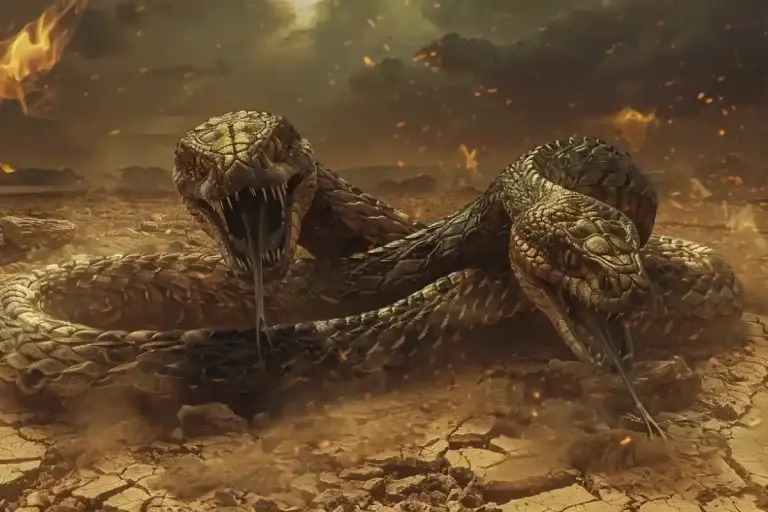
Descriptions of the Lernaean Hydra vary, but most agree it possessed multiple serpent-like heads—anywhere from six to a hundred. The most consistent detail is its regenerative ability: for every head cut off, two more would grow in its place. At its core, the creature possessed one immortal head that no blade could kill.
Its venom was equally feared. Ancient writers claimed even the breath and blood of the beast were so toxic they could scorch the earth, poison rivers, and kill a man with a single drop. This venom would later play a crucial role in Hercules’ story, extending its curse beyond the swamp and into later tragedies.

Hercules and His Labors
The most famous tale of the Lernaean Hydra comes from the cycle of the Twelve Labors of Hercules. After killing his wife and children in a fit of madness sent by Hera, Hercules was forced to atone by serving King Eurystheus. The king, hoping to see Hercules fail, assigned tasks thought impossible.
The second labor ordered the hero to slay the serpent of Lerna. Hera, the beast’s protector, delighted in the challenge, certain that the regenerative monster would overwhelm even Zeus’ son.
Strategies of the Hero - Fire, Sword, and Wit
Hercules did not march into the marshes alone. He was accompanied by his nephew Iolaus, who played a decisive role in the battle. At first, Hercules tried to hack away at the creature’s heads with his sword, but quickly discovered the futility of the effort. Every head severed gave rise to two more.
Realizing brute strength would not suffice, Hercules devised a strategy. After decapitating each head, Iolaus cauterized the wound with a burning torch. This prevented new heads from sprouting. Slowly, the serpent’s power waned. Finally, Hercules severed the immortal head, which he buried beneath a massive rock to ensure it would never rise again.
As a grim trophy, Hercules dipped his arrows into the Hydra’s blood, making them lethally poisonous. These arrows later played critical roles in several myths, including the centaur Nessus’ death and ultimately the demise of Hercules himself.

Symbolism of the Hydra in Ancient Greece
The Lernaean Hydra symbolized many things to the Greeks. On one level, it was the embodiment of an unbeatable foe—problems that multiplied the harder one tried to solve them. Politically and culturally, it could represent the endless wars between city-states, or the persistence of chaos against order.
The image of multiple heads regrowing became a lasting metaphor for challenges that only worsen when confronted without strategy. This symbolism endured well beyond antiquity, surviving in idioms and metaphors of modern times.
The Hydra in Art and Culture
Ancient pottery, carvings, and mosaics often depicted Hercules’ struggle against the swamp-dwelling monster. These artworks usually showed the hero wielding a club or sword, with Iolaus nearby brandishing a torch. Some classical vase paintings even portrayed Hera watching the battle from above.
The motif of a multi-headed beast has since influenced countless myths, fairy tales, and modern fantasy. Dragons with multiple heads in Slavic folklore, or creatures in role-playing games like Dungeons & Dragons, owe much to this primordial serpent of Lerna.
Influence on Later Myths and Fantasy Beasts
The concept of a regenerating monster has echoed across cultures. The idea that one wound could lead to more danger resonates with stories of undead warriors, self-healing demons, and shapeshifting hybrid beasts. The Lernaean Hydra can be seen as a prototype for many later fictional characters, from comic book villains to monstrous bosses in modern video games.
Its poisonous blood also influenced medieval legends of dragons whose venomous breath laid waste to entire kingdoms. From the Renaissance to today, the Lernaean Hydra has remained a symbol of corruption, excess, and unstoppable terror.

Lernaean Hydra - In The Movies
- Hercules (Disney) – An animated retelling where the hero battles a cartoonish but terrifying multi-headed monster.
- Jason and the Argonauts (1963) – Features a Hydra as guardian of the Golden Fleece.
- Hercules (2014, starring Dwayne Johnson) – Includes a darker cinematic reimagining of the battle.
Lernaean Hydra - In Games
- God of War Series – The Hydra appears as a towering sea-monster in early installments.
- Dungeons & Dragons – The Hydra is a recurring enemy in tabletop adventures and video game adaptations.
- Assassin’s Creed Odyssey – While not directly fought, the Hydra’s influence looms in mythic quests and lore.
Lernaean Hydra - In Literature
- Theogony by Hesiod – One of the earliest written sources for the creature’s genealogy.
- The Library of Apollodorus – Provides details on Hercules’ labor.
- Percy Jackson & the Olympians: The Sea of Monsters (Rick Riordan) – Reimagines the Hydra in modern fantasy for younger readers.
Disclosure: This post contains affiliate links. This means we may earn a commission should you chose to sign up for a program or make a purchase using our links at no extra cost to you. As an Amazon Associate, we earn from qualifying purchases. We do make sure to include our favorites and hope you enjoy them as much as we do!

Join the Realm of Myth & Legend
Uncover new creature lore, rare folklore, fresh illustrations, and deeper mysteries from MythicalCreaturesandBeasts.
Success!
A new realm of myth and legend now awaits you — check your inbox for the final step.
FAQ
Q: Who were the parents of the Lernaean Hydra?
A: The beast was the offspring of Typhon and Echidna, two primordial monsters of Greek myth.
Q: Did Hercules fight the Hydra alone?
A: No. His nephew Iolaus aided him by cauterizing the wounds to prevent new heads from growing.
Q: How many heads did the Hydra have?
A: Ancient accounts vary from six to one hundred, though nine is most commonly cited.
Q: Why was the Lernaean Hydra immortal?
A: It had one central head that could not be killed by traditional means, so Hercules buried it beneath a rock.
Q: What role did Hera play in the myth?
A: Hera raised the Hydra specifically to challenge and destroy Hercules.
Q: What happened to the Hydra’s venom?
A: Hercules dipped his arrows in it, making them deadly—though this would later contribute to his own downfall.
Q: Was the Hydra unique among Greek monsters?
A: Yes, though it shared siblings like Cerberus and Chimera, its regenerative powers made it distinct.
Q: Why was Lerna significant in the myth?
A: The swamp of Lerna was linked to the Underworld, enhancing the creature’s role as a liminal guardian.
Q: How has the Hydra influenced modern culture?
A: It inspired multi-headed dragons, monsters in fantasy games, and remains a metaphor for unsolvable problems.
Q: Does the Hydra still appear in pop culture today?
A: Absolutely—movies, games, comics, and literature continue to reinvent the beast for new generations.