Skip to content

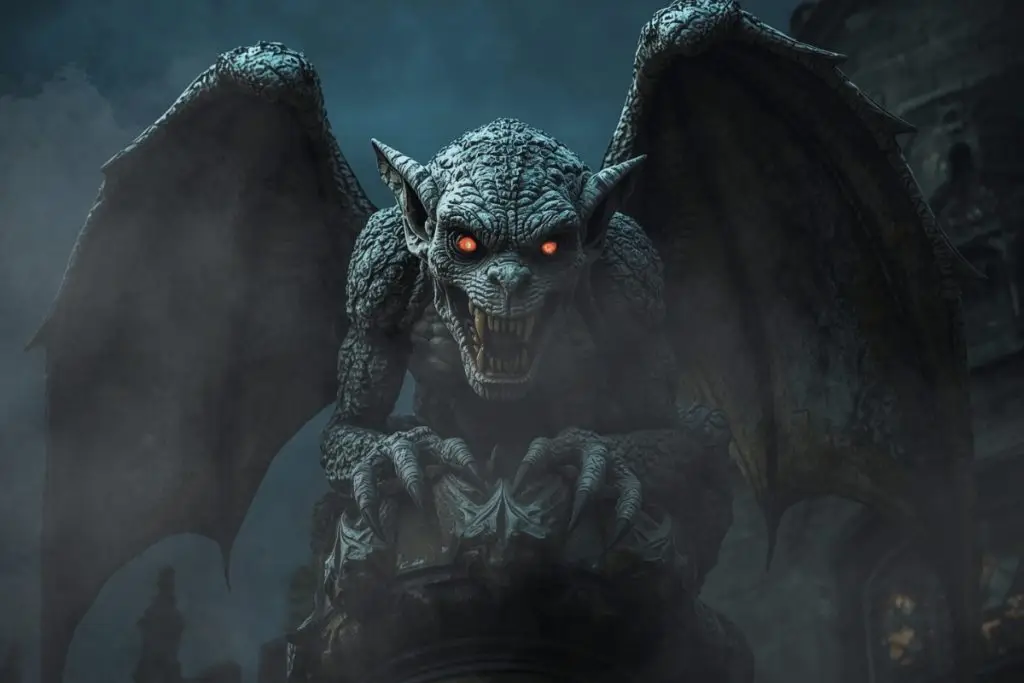
Gargoyles are grotesque stone figures found on medieval buildings, created both to channel rainwater and to serve as spiritual guardians. Their monstrous forms were believed to frighten away evil forces, embodying humanity’s attempt to contain darkness through stone, symbol, and sacred architecture.
The Gargoyle is more than just a strange decoration clinging to the side of a cathedral. Born out of necessity as rain spouts to protect medieval architecture, these eerie stone figures evolved into symbols of protection, fear, and imagination.
Over the centuries, legends transformed them from practical drainpipes into living characters of Gothic myth, said to ward off evil spirits and come alive at night. Blending artistry, function, and folklore, they stand among the most fascinating hybrid creatures of European history.
Guardians in Stone - The Mystique of the Gargoyle
Table of Contents
Origins and Purpose of the Gargoyle
In medieval Europe, builders faced a constant enemy – water damage. To combat it, architects devised a clever system—carved stone spouts that channeled rainwater away from church walls. These figures earned their name from the Old French gargouille, meaning throat or gullet, imitating the sound of water rushing through them.
While these stone channels were practical, artisans soon shaped them into terrifying beasts and faces. In doing so, they turned a functional design into one of the most enduring images of Gothic architecture.

Gothic Architecture and Symbolism
The great cathedrals of the Middle Ages, especially Notre-Dame in Paris, made these creatures famous. High above the city, their distorted visages stared down as reminders of sin, chaos, and the dangers that lay beyond the church’s walls.
They were not only functional but also symbolic. To a medieval worshipper, these frightening forms represented the protection of holy ground. Their monstrous appearance was meant to scare away evil forces lurking in the night.
Disclosure: This post contains affiliate links. This means we may earn a commission should you chose to sign up for a program or make a purchase using our links at no extra cost to you. As an Amazon Associate, we earn from qualifying purchases. We do make sure to include our favorites and hope you enjoy them as much as we do!
Myths and Legends in Europe
Over time, folklore reimagined these carvings as more than stone. One French legend tells of La Gargouille, a dragon-like monster slain by Saint Romanus in Rouen. Its body was mounted on a church wall as the first of these grotesque water spouts.
Other tales claimed the stone guardians descended from their ledges after dark to patrol streets. Some believed they protected the faithful, while others feared they were cursed souls trapped in stone for eternity.

Hybrid Stone Beasts and Grotesques
Not every carved figure on a cathedral qualifies as a true gargoyle. Many purely decorative ones are known as grotesques. These served no drainage function but often took on equally monstrous forms.
Artists relished the chance to create hybrids: lion claws with bat wings, human faces with muzzles, or serpentine tails curled around their perches. Each became a silent fictional character of the building itself, unique in personality and design.
Protectors in Urban Myths
Through centuries, stories grew more elaborate. Some city legends told of these statues awakening to battle witches, demons, or undead creatures on rooftops. Others whispered that anyone cursed would become one of these stone watchers, forced to endure centuries in silence.
As myths blended with religion, they came to embody both fear and comfort—terrifying to look at, yet reassuring as protectors of sacred ground.

Similar Guardians in Other Cultures
Though rooted in Gothic Europe, the concept of frightening guardians spans the globe. Ancient Egypt used lion-headed spouts to drain water from temples. In Greece, grotesque masks and figures lined rooftops as protective charms. Even in Asia, dragon-faced roof ornaments served as both spiritual defenders and practical water guides.
This shows the universality of humans turning monstrous images into symbols of protection.
Fictional Characters Born of Stone
Modern culture has embraced these figures far beyond cathedrals. In literature, television, and film, they often appear as cursed beings or secret guardians. Sometimes they are tragic souls trapped in stone, other times loyal defenders who awaken at night to protect humanity.
This reimagining shows how medieval myths can evolve into timeless characters, keeping their influence alive in new forms of storytelling.

Gargoyles - In The Movies
- Gargoyles (1972 TV Movie) – A horror classic where ancient stone creatures emerge as a hidden race.
- The Hunchback of Notre Dame (Disney) – Famous for the animated cathedral figures that guide and befriend Quasimodo.
- Gargoyle: Wings of Darkness – A dark fantasy film portraying them as monstrous predators.
Gargoyles - In Games
- Castlevania Series – Gothic action adventures featuring winged stone demons as recurring foes.
- World of Warcraft – Stone-winged warriors summoned by necromancers in the Scourge.
- Gargoyle’s Quest – A spin-off game starring Firebrand, one of the most famous gargoyle characters in gaming.
Gargoyles - In Literature
- The Gargoyle by Andrew Davidson – A historical novel blending myth, love, and dark fantasy.
- Gargoyle: Wings of Stone by Jenna Wolfhart – A modern fantasy imagining stone protectors of ancient secrets.
Disclosure: This post contains affiliate links. This means we may earn a commission should you chose to sign up for a program or make a purchase using our links at no extra cost to you. As an Amazon Associate, we earn from qualifying purchases. We do make sure to include our favorites and hope you enjoy them as much as we do!

Join the Realm of Myth & Legend
Uncover new creature lore, rare folklore, fresh illustrations, and deeper mysteries from MythicalCreaturesandBeasts.
Success!
A new realm of myth and legend now awaits you — check your inbox for the final step.
FAQ
Q: What makes a statue a true gargoyle?
A: It must function as a water spout. Decorative versions without drainage are grotesques.
Q: Why were they made to look monstrous?
A: Their frightening forms symbolized warding off evil while reminding believers of the dangers of sin.
Q: Do all Gothic cathedrals have them?
A: No. While iconic, only some structures included them, though many inspired later replicas.
Q: Are they demons or protectors?
A: They were designed as protectors, though their monstrous forms sometimes caused fear.
Q: Where does the word come from?
A: From the French gargouille, meaning throat or gullet, imitating water rushing through stone.
Q: Did people really believe they came alive?
A: Legends suggested so, though this belongs more to folklore than reality.
Q: Are they only European?
A: The classic form is European, but similar protective water spouts exist worldwide.
Q: Why do modern buildings include them?
A: They are often used decoratively, as nods to Gothic style and urban myth.
Q: How were they crafted?
A: Medieval stone carvers used chisels on limestone, each figure unique.
Q: Do they still influence modern culture?
A: Absolutely. They appear in books, films, games, and even comic series.